Bread Preferments: Why Use Them, Different Types, and How Long They Ferment
Flour, water, yeast, and salt can be mixed all at once, and the dough will still become bread. This is called the direct method. It is simple, quick, and perfectly suitable for many recipes.
But if part of the flour is mixed with water and a small amount of yeast or sourdough starter in advance, the bread develops differently. This mixture is called a preferment. While it rests, fermentation begins before the final dough is mixed.
A preferment can give bread a deeper aroma, improve the texture of the crumb, strengthen or soften the dough, and help the loaf stay fresh longer. However, different preferments behave differently, and using one does not automatically make every bread better.
What Is a Bread Preferment?
A preferment is a portion of the recipe’s flour and liquid fermented separately before the final dough is mixed.
Depending on the type, it may contain commercial yeast, sourdough starter, salt, or previously fermented dough. Once it has matured, the preferment is combined with the remaining flour, water, salt, and other ingredients.
The flour and water used in the preferment are not additional ingredients. They are taken from the total amounts in the recipe.
For example, if a recipe contains 500 grams of flour and 350 grams of water, you might use 200 grams of flour and 200 grams of water to prepare a poolish. The final dough would then receive the remaining 300 grams of flour and 150 grams of water.
Why Use a Preferment?
The main reason is flavor. A longer, slower fermentation allows organic acids and aromatic compounds to develop before the final dough is mixed. The finished bread usually tastes more complex than bread made with a fast direct method.
A preferment can also influence the dough structure.
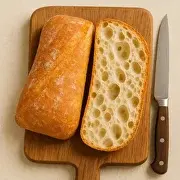
A liquid preferment such as poolish makes the dough more extensible. It stretches easily and works particularly well for baguettes, ciabatta, and other breads in which a light, open crumb is desirable.
A stiff preferment such as biga contributes strength and elasticity. It can help dough hold its shape while still producing a light crumb.
Preferments may also improve crust color, aroma, and keeping quality. Bread often remains pleasantly soft longer because fermentation changes the way flour absorbs and retains water.
However, the result depends on the maturity of the preferment. An immature preferment contributes little flavor and fermentation power. An overripe one can become weak, sharply acidic, or overly alcoholic and may damage the structure of the final dough.
Poolish
Poolish is a liquid yeast preferment made with equal weights of flour and water. This means it has 100% hydration.
A typical poolish contains:
100% flour
100% water
0.05–0.2% instant yeast
The percentages are based on the flour used in the poolish.
It usually ferments for 8–16 hours at room temperature. The exact time depends on the amount of yeast and the temperature of the room.
A mature poolish is bubbly and slightly domed. Its surface is covered with small bubbles, and the center may just begin to flatten. It has a pleasant creamy, nutty, or lightly fermented aroma.
If the surface has completely collapsed and the smell is strongly alcoholic, the poolish has probably passed its ideal stage.
Poolish improves extensibility, aroma, crust, and crumb openness. It is often used for baguettes, ciabatta, pizza, and rustic hearth breads.
Biga
Biga is an Italian stiff preferment. Unlike poolish, it contains much less water and has a rough, firm consistency.
Traditional biga is commonly made at approximately 44–55% hydration, although some modern recipes use a little more water.
A typical formula is:
100% flour
44–55% water
0.1–1% yeast
Biga usually ferments for 12–18 hours at a cool room temperature. It should increase in volume and develop a sweet, lightly fermented aroma. Inside, it becomes porous and web-like, but it should not turn into a soft, collapsed mass.
Because biga is relatively dry, it develops differently from poolish. It adds strength and elasticity and can contribute a light crumb with a pronounced wheaty aroma.
It is frequently used in Italian breads, ciabatta, pizza, and rolls. Mixing stiff biga into the final dough can take more time because it must be broken into small pieces and distributed evenly.
Pâte Fermentée
Pâte fermentée means “fermented dough.” It is simply a piece of previously mixed bread dough saved for the next batch.
Unlike poolish and biga, it usually already contains salt. Its hydration depends on the original dough.
A typical pâte fermentée contains:
Flour
Water
Yeast
Salt
It may be fermented for several hours at room temperature or kept in the refrigerator for approximately 12–48 hours.
Before mixing the next batch, the old dough is cut into small pieces and added to the new ingredients.
Pâte fermentée contributes mature bread flavor and can improve dough strength. It is convenient for bakers who make similar bread regularly because part of one batch becomes the preferment for the next.
It is important to include the flour, water, yeast, and salt contained in the old dough when calculating the final recipe.
Sponge
The word “sponge” describes a broad group of relatively quick preferments. A sponge is usually made with part of the flour, liquid, and a larger amount of yeast than an overnight poolish.
It may ferment for approximately 30 minutes to 4 hours.
The consistency can range from thick batter to soft dough, depending on the recipe. A mature sponge becomes expanded, foamy, and aromatic.
The sponge method is often used for sandwich bread, rolls, enriched dough, and sweet baking. It helps activate the yeast before ingredients such as sugar, eggs, and fat are added.
Because it usually matures quickly, a sponge does not develop the same depth of flavor as a long-fermented poolish or biga. Its main advantages are reliable fermentation and improved dough performance.
Sourdough Levain
A levain is a preferment prepared with an active sourdough starter instead of commercial yeast.
A portion of mature starter is mixed with fresh flour and water and allowed to ferment before being added to the final dough.
Its hydration can vary greatly. A liquid levain may have 100% hydration or more, while a stiff levain may contain only 50–65% water relative to flour.
A levain commonly matures in:
4–12 hours
The time depends on temperature, feeding ratio, flour type, hydration, and the strength of the starter.
A ripe levain usually expands noticeably, develops bubbles throughout, and has a pleasantly fermented aroma. It should be used near its peak or shortly afterward, according to the flavor and fermentation schedule required by the recipe.
A young levain generally produces a milder flavor. A more mature levain can contribute greater acidity, but if it is left too long, it may lose strength.
A levain is not the same thing as the starter you maintain from day to day. The starter is the ongoing culture. The levain is a separate build prepared from that culture for a particular batch of bread.
How Much Preferment Should You Use?
The amount depends on the bread and the fermentation schedule.
In many yeast bread recipes, approximately 20–40% of the total flour is fermented in advance. Some formulas use 50% or more, but this can make fermentation much faster and leave less room for error.
For sourdough bread, the levain may contain approximately 10–30% of the total flour. The exact amount depends on the desired fermentation time, dough temperature, and starter strength.
More preferment does not always mean more flavor. It usually means faster fermentation. A smaller amount allowed to mature properly can produce a more balanced result than an excessive amount that causes the dough to ferment too quickly.
How to Know When a Preferment Is Ready
Do not rely only on the clock. Watch the volume, surface, internal structure, and aroma.
A ripe liquid preferment is aerated and bubbly. A stiff preferment becomes expanded and porous inside. The aroma should be pleasantly fermented, not harsh or unpleasant.
If the preferment has barely risen and contains few bubbles, it may need more time.
If it has collapsed completely, become very runny, or developed an overpowering alcoholic smell, it is probably overripe. It may still ferment the dough, but its strength and effect on gluten can be less predictable.
When Can You Make Bread Without a Preferment?
A preferment is useful, but it is not essential for every loaf.
The direct method works well when time is limited, when a mild flavor is preferred, or when the final dough will already undergo a long fermentation.
For example, dough mixed with a small amount of yeast and left overnight in the refrigerator can develop plenty of flavor without a separate poolish or biga.
A preferment may also be unnecessary in bread containing strong-flavored ingredients such as spices, cheese, olives, roasted onions, or large quantities of seeds. In these recipes, the subtle difference created by a preferment may be less noticeable.
Enriched dough can be made directly as well, although a sponge may help when high amounts of sugar and fat slow the yeast.
The choice depends on the desired result and your schedule. A direct dough is not an inferior method. It is simply a different way to organize fermentation.
Which Preferment Should You Choose?
Choose poolish when you want extensible dough, a crisp crust, a delicate aroma, and a more open crumb.
Choose biga when the dough needs additional strength and a pronounced wheaty flavor.
Use pâte fermentée when you bake regularly and want to carry the flavor of one batch into the next.
Choose a sponge for quicker yeast activation, especially in soft or enriched bread.
Use a sourdough levain when you want natural leavening and the distinctive aroma and acidity created by a sourdough culture.
The best preferment is not the most complicated one. It is the one that suits the flour, the bread, and the time available. When it is used at the right stage of maturity, even a simple mixture of flour, water, and a tiny amount of yeast can noticeably change the flavor and texture of the finished loaf.
03.08.2026
Irina | Babushkin Khleb
See also