What Is Tartine Bread and How Is It Different from Regular Sourdough?
Tartine bread is often described as if it were a completely separate type of bread. In reality, it is sourdough—but sourdough made with a particular approach to fermentation, dough handling, shaping, and baking.
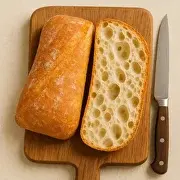
Its most recognizable features are a deeply caramelized crust, a moist and irregular crumb, large and small holes, and a mild, complex flavor. Yet the real difference is not simply the appearance of the finished loaf. Tartine-style bread teaches the baker to watch the dough closely instead of relying only on a fixed schedule.
That is what makes it both attractive and challenging for home bakers.
Tartine Bread Is Sourdough Bread
The name comes from the style of naturally leavened bread popularized by Tartine Bakery in San Francisco and baker Chad Robertson.
The dough is raised with an active sourdough starter rather than commercial yeast. Like other sourdough breads, it goes through bulk fermentation, shaping, final proofing, and baking with steam.
So Tartine bread is not an alternative to sourdough. It is one way of making sourdough.
The confusion often begins because “regular sourdough” can mean many different things. It may be a firm sandwich loaf, a dense whole-grain bread, a low-hydration country loaf, or bread made with a long, sour fermentation. Tartine-style bread usually refers to a softer, wetter country dough with a lighter crumb and a bold crust.
The Dough Contains More Water
One of the first differences a baker notices is the hydration.
Tartine-style dough is usually wetter than the firm dough many beginners expect when they start baking bread. It feels soft, sticky, and extensible. Instead of sitting as a tight ball after mixing, it gradually gains strength during rests and folds.
More water can help create a moist crumb and irregular holes, but water alone does not produce beautiful open bread. If the flour is weak, the starter is sluggish, or fermentation is poorly timed, additional water will simply make the dough harder to shape.
This is why it is reasonable to begin with slightly lower hydration. A loaf with a moderately open crumb and good structure is much better than a flat loaf made from dough that was too wet for the flour.
Tartine-style baking is not a competition to add as much water as possible. The hydration must suit the flour and the baker’s experience.
Strength Develops Gradually
Traditional bread recipes may instruct the baker to knead until the dough becomes smooth and elastic. Tartine-style dough is commonly developed more gently.
After the flour absorbs the water, the dough is strengthened through a series of folds during the early part of bulk fermentation. Each fold organizes the gluten network and helps the dough hold the gas produced by the starter.
The change should be noticeable. At first, the dough may feel loose and rough. Later, it should become smoother, more elastic, and easier to lift as one cohesive mass.
Gentle handling does not mean doing nothing. The baker still builds strength, but does it gradually, while fermentation is already taking place.
If the dough remains slack after every fold, the problem may be weak flour, excessive hydration, insufficient development, or fermentation that has already progressed too far.
Bulk Fermentation Is Judged by the Dough
This is perhaps the most important difference between Tartine-style bread and many ordinary bread recipes.
A recipe may give an approximate bulk fermentation time, but the dough decides when the stage is finished. Starter activity, dough temperature, room temperature, flour, and hydration can change the timing considerably.
The dough does not always need to double. In many Tartine-style recipes, especially before a long cold proof, an increase of approximately 40–60% may be enough.
Properly fermented dough looks aerated and slightly domed. Bubbles are visible along the sides, the edges become rounded, and the dough moves gently when the container is shaken. It feels lighter than it did after mixing but still has enough strength to hold together.
Underfermented dough may be strong but heavy, with few visible bubbles. Overfermented dough can appear extremely airy yet become sticky, fragile, and difficult to shape.
Watching only the clock is one of the easiest ways to miss the correct moment.
The Crumb Is Open but Not Empty
Tartine bread is famous for its open crumb, but a successful loaf should not contain only enormous holes.
The best crumb has a mixture of small, medium, and larger openings. It feels light and moist while still being practical to slice. The large holes are supported by an elastic network rather than surrounded by dense, gummy dough.
A few huge tunnels with heavy dough beneath them are not necessarily a sign of success. They can indicate incomplete bulk fermentation, uneven fermentation, or shaping that trapped large pockets of air.
The goal is not the largest possible holes. The goal is a well-fermented crumb that reflects good dough strength and careful handling.
Regular sourdough can also have an open crumb, and Tartine-style bread can have a more moderate crumb. The distinction is not determined by holes alone.
The Crust Is Baked Darker
Another recognizable feature is the crust.
Tartine-style loaves are usually baked at a high temperature with steam during the first part of baking. A Dutch oven is popular in home kitchens because it traps the moisture released by the dough and creates a humid environment around the loaf.
Steam keeps the surface flexible while the bread expands. After the lid is removed or the steam is released, the crust dries and develops a deep brown color.
The finished loaf is often darker than the pale golden bread some home bakers are accustomed to. This is intentional. A well-caramelized crust contributes roasted, nutty, and slightly sweet flavors.
Of course, the crust should not taste burned. There is a difference between deep caramelization and a black, bitter bottom caused by excessive heat.
Cold Proofing Adds Flavor and Control
After shaping, Tartine-style dough is often placed in a proofing basket and refrigerated overnight.
The cold proof develops flavor, makes the dough firmer, and allows it to be scored more cleanly. It also gives the baker a convenient schedule: the loaf can be shaped in the evening and baked the following morning.
However, refrigeration does not immediately stop fermentation. Warm dough continues fermenting while its center cools. If the dough was already close to overfermented before it entered the refrigerator, a long cold proof can push it too far.
Cold proofing is a continuation of the process, not a way to repair weak dough.
Some regular sourdough breads are baked after a room-temperature proof, while others are refrigerated just like Tartine bread. Once again, the methods overlap.
Does Tartine Bread Taste More Sour?
Not necessarily.
Despite being made with sourdough starter and a long fermentation, Tartine-style bread often has a balanced flavor rather than an aggressively sour one. A healthy starter used near its peak, controlled fermentation, and a cool final proof can produce gentle acidity with a pronounced wheat flavor.
The final taste depends on the starter, flour, temperature, feeding schedule, and fermentation time. The word “sourdough” describes natural fermentation; it does not mean the bread must taste sharply sour.
If the loaf becomes much more acidic than expected, the starter may have been used too late, the dough may have fermented too long, or the refrigerator may be warmer than assumed.
Is Tartine Bread More Difficult to Make?
The individual steps are not especially complicated. The challenge is learning to recognize what the dough needs.
A baker must decide whether the dough needs another fold, whether bulk fermentation is complete, whether the surface has enough tension, and whether the loaf is ready to bake. Those decisions cannot always be reduced to exact minutes.
The first Tartine-style loaf may not have a dramatic open crumb or a perfect ear. That does not make it a failure. If the bread has good flavor, a properly baked crumb, and enough strength to rise, it is already teaching you how your flour and starter behave.
With practice, the dough becomes easier to read.
Tartine Is a Method, Not Just a Look
A loaf does not become Tartine-style merely because it has large holes, a flour pattern, and a sharply lifted score.
The method is built on naturally leavened dough, relatively high hydration, gradual gluten development, careful control of bulk fermentation, gentle shaping, cold proofing, and baking with strong heat and steam.
Regular sourdough may use some or all of the same techniques. The boundary between the two is not strict. Tartine bread is best understood as a recognizable style within the much larger world of sourdough baking.
Its greatest lesson is not how to reproduce one famous loaf. It is how to observe fermentation, adapt to the flour in front of you, and move the dough forward when it is ready—not simply when the timer rings.
Read Also
Tartine-Style Sourdough Bread Recipe: A Step-by-Step Guide
What Is Tartine Bread and How Is It Different from Regular Sourdough?
How Much Should Tartine Dough Rise During Bulk Fermentation?
How Many Stretch and Folds Does Tartine Dough Need?
What Is the Best Hydration for Tartine Bread?
How to Get an Open Crumb in Tartine Bread
What Is Tartine Bread and How Is It Different from Regular Sourdough?
How Much Should Tartine Dough Rise During Bulk Fermentation?
How Many Stretch and Folds Does Tartine Dough Need?
What Is the Best Hydration for Tartine Bread?
How to Get an Open Crumb in Tartine Bread
29.07.2026
See also