Why Is High-Hydration Dough So Sticky?
If you've ever tried making high-hydration sourdough, you probably remember the first time you touched the dough.
Instead of forming a smooth, firm ball, it clung stubbornly to your fingers. It stretched in every direction, stuck to the bowl, the scraper, the worktop—and sometimes even seemed determined to stay attached to your hands forever.
At that moment it's easy to think something has gone terribly wrong.
The truth is much simpler.
High-hydration dough is supposed to feel sticky.
Water Changes Everything
The main difference between a standard bread dough and a high-hydration dough is simple: more water.
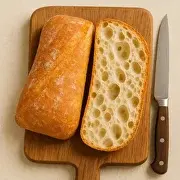
That extra water gives the finished loaf many of the qualities bakers love—an open crumb, a light texture and a beautifully crisp crust.
But it also changes how the dough behaves before it reaches the oven.
With more moisture surrounding the gluten strands, the dough becomes softer, stretchier and far more willing to stick to almost anything it touches.
That isn't a flaw.
It's simply the nature of wet dough.
Sticky Doesn't Mean Weak
Many beginners assume sticky dough must be poorly mixed or badly made.
In reality, some of the best artisan sourdough loaves begin with dough that feels surprisingly difficult to handle.
A dough can be sticky and still have excellent gluten development.
Likewise, a dough that feels dry isn't automatically stronger.
The real question isn't whether the dough sticks.
It's whether the gluten is becoming stronger as fermentation continues.
Time Is Part of the Recipe
One mistake many new bakers make is judging the dough too early.
Freshly mixed dough almost always feels wetter than it will an hour later.
As the flour continues absorbing water and the gluten develops, the dough gradually becomes smoother and easier to handle.
Nothing has been added.
Nothing has been removed.
Time has simply done its job.
This is one reason experienced bakers rarely panic during the first stages of bulk fermentation.
They know the dough is still changing.
Flour Isn't Always the Answer
When dough sticks to everything, reaching for the flour bag feels natural.
But covering the dough with extra flour often hides the real issue instead of solving it.
Too much flour on the outside can dry the surface, making shaping more difficult while changing the balance of the original recipe.
Before adding flour, ask yourself whether the dough actually needs it—or whether it simply needs another fold and a little more patience.
Very often, patience wins.
Learn to Work With Wet Dough
Professional bakers don't fight high-hydration dough.
They adapt to it.
Instead of heavily flouring their hands, they often wet them lightly.
Instead of pulling the dough forcefully, they use a bench scraper to lift and guide it.
Instead of rushing, they make smooth, confident movements.
Ironically, wet dough usually sticks less when you handle it calmly than when you hesitate.
Good technique often matters more than dry hands.
Your Flour Plays a Bigger Role Than You Think
Not every flour absorbs water in the same way.
A strong bread flour may handle 80% hydration with ease.
Another flour may struggle at 72%.
Whole wheat flour, freshly milled flour and different protein levels all influence how sticky the dough feels.
That means two bakers can follow exactly the same recipe and end up with dough that behaves very differently.
The recipe hasn't changed.
The flour has.
High Hydration Takes Practice
There is a reason many experienced bakers recommend starting with moderate hydration before chasing extremely open crumbs.
Handling 70% hydration teaches the fundamentals.
Working with 75% builds confidence.
Only then does 80% or more begin to feel manageable.
There is nothing wrong with reducing hydration while you learn.
A beautiful loaf with slightly less water is far better than a frustrating bake that teaches nothing except discouragement.
Sticky Dough Can Produce Amazing Bread
Many of the world's most famous breads—ciabatta, rustic country loaves and modern artisan sourdough—begin as soft, sticky doughs.
If you judged them before fermentation was complete, you might think they were failures.
Instead, they become breads with beautiful oven spring, glossy crumb and incredible texture.
The stickiness isn't the problem.
It's simply part of the journey.
High-hydration dough is sticky because that's exactly how it should be.
Extra water creates a softer, more extensible dough that requires patience, gentle handling and trust in the process.
The more you bake, the less you'll see sticky dough as something to fix.
Instead, you'll recognize it as the beginning of a loaf with the potential to become something truly exceptional.
04.08.2026
See also